My Favorite Things 003

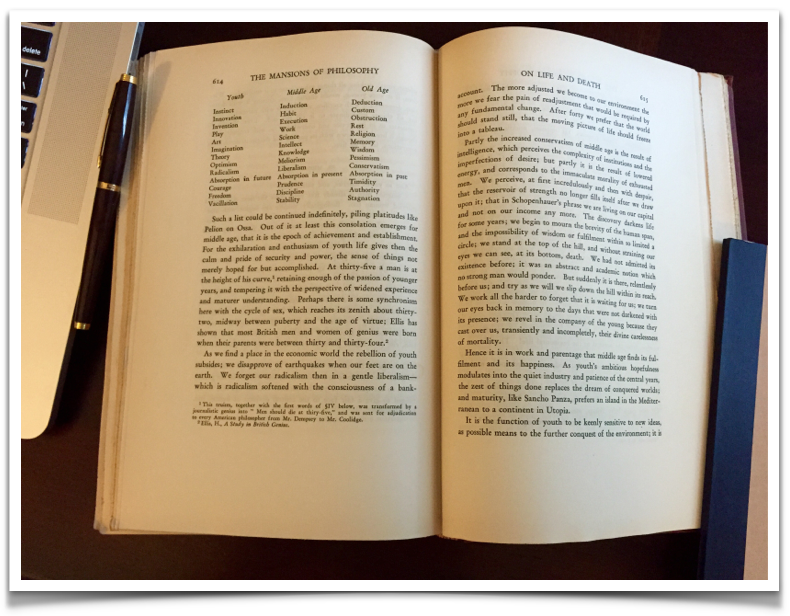
Mansions of Philosophy by Will Durant

Screen Shot 2015-06-13 at 9.17.32 AM

I don’t really remember when I was first introduced to Will Durant’s Mansions of Philosophy, but I do remember the exhilaration I felt as I turned every page for the first time.  By the time I got to page 264, I was fully captivated by this Jesuit educated philosopher.  I can unabashedly say that no three pages of anything I have ever read before or since have had the abiding impact on my life that Will Durant’s passage on the Positive Character [pages 264-266] has had.

What he has above all is will.”  This still jumps off page 266 like a bolt of lightning every time I turn to it.

He ends this remarkable passage with “He dies never doubting that life was a boon, and only sorry that he must leave the game to younger players.”  And, for me, life has certainly been a boon.

Screen Shot 2015-06-13 at 9.50.45 AM

For over 40 years, I still roam the Mansion chapters at random – never once leaving unmoved.  I could site a hundred passages or more that have lifted my spirit, challenged my perspective, or honed my character.  Although written in 1929, it remains as relevant as ever, while proving time and again that its impact on me is as enduring as it is relentless.  Like 50 years of Fr. Sturm, it gives me no respite.  It pushes me to reevaluate everything, never pausing to be complacent with the man I am.  Yet, like Fr. Sturm, always providing me with the comfort of an appreciation for the gift of life and the man I might yet be.  Yes, life is a dance, not a dress rehearsal; and it’s up to us to make the most of it.

Will Durant’s timeless perspective comes from his belief that “Most of us spend too much time on the last twenty-four hours and too little on the last six thousand years.”  Fortunately, this is balanced by his constant urging to live life in the present with a confident zeal for all that life is meant to be.  I’m in it every minute.


Pick up a copy of the revised edition, The Pleasures of Philosophy, and I am certain that you will not be the lesser for it.  It just might become one of your favorites.


The Third Factor: Genetics. Environment. Will.

Will Durant finds his way into the Advantage Co handbook directly and indirectly on every page.  His influence on my business philosophy is as conspicuous as it is on my aesthetics.

The Handbook

37. Will Durant’s The Mansions of Philosophy.  ‘We may take the same attitude to pugnacity and its advance agent, pride; these are virtues, not vices; and though we shall prune them, it is only to make them grow.  Not quarrelsomeness, and not conceit: conceit is the imagination of victories to come, pride is the remembrance of victories achieved, and quarrelsomeness is the pugnacity of the weak.  To fight does not mean of necessity to shout and strike; it may mean to persist quietly and politely to one’s goal.’

‘To be ambitious need not mean to be cruel and greedy; the strong man gives as readily as he earns, and finds his joy in building rather than in owning; he makes houses for others to live in, and money for others spend.’

‘Character does not come from conspicuous consumptions, it comes from construction and creation.’

57. The Mansions of Philosophy.  In 1929, Will Durant wrote The Mansions of Philosophy, a story of human life and destiny, or, as the subtitle promises, an attempt at a consistent philosophy of life.  It has been a chisel on my life.  One of the most revealing chapters concerns itself with character.  Character, in Durant’s view, is a sum of inherent dispositions and desires; it is a mosaic of instincts colored and rearranged by environment, occupation, and experience.  Below he formulates the extremes: the negative and the positive character.

58. Here is his negative character: …If he meets a man he observes him unobserved, looking at everything but the eyes, and measuring the other’s power and intentions.  If danger comes, he trembles with surprise and fear; he does not feel active anger, but is consumed with a fretful resentment; his violence is the mask of one who knows that he will submit.  He shrinks from responsibility and trial.  He believes that the world would entrust him with leadership if it had intelligence.  If he succeeds in anything, he credits himself; if he fails, he is “not guilty”; it is the environment [i.e., other people] that is at fault, or the government, or the arrangement of the stars.  He is a pessimist about the world, and an optimist about himself.  Rest and inaction, being his essence, causes him to shun the sharper realities and tasks of life, and shrinks into a world of reverie, in which he wins many victories.  These being his impulses, he is weak above all because his impulses are not coordinated by some purpose that dominates and unifies his life.  He is restless though always seeking rest; he passes discontent from project to project and from place to place; he is a ship that never makes a port, while all its cargo rots.  He is incapable of regularity or industry; and though he seems at times nervously busy, he finds himself unable to persist in a definite purpose.  He is intense in intention and lax in application; he is given to bursts of passion that simulate strength, but they end in quick exhaustion and accepted chaos.  He has a thousand wishes, but no will.

59. Here is the positive character: …If he looks at you it is face to face; but he does not look at you; he is absorbed in his enterprise, intent on his goal. His motto is ‘to have and to hold.’  It is his pugnacity that gives power to his purposes; in him desires are not timid aspirations, they are unavoidable impulsions; for their sake he will accept responsibilities, dangers, and wearing toil.  He has more courage than virtue, and less conscience than pride.  He has powerful ambitions; he despises limits, and suspects humility.  If he meets a man stronger than himself, his impulse is not to bow down before him, but to honor him with emulation and rivalry.  When he is defeated, it is after a struggle to exhaustion.  He is curious; all processes lure him, and his mind plays actively about.  He believes in action rather than thought, and like Caesar he thinks nothing finished if anything remains undone.  He is domineering, and likes to think that men are bricks to his trowel, to build with them what he likes; and they find a secret zest in being led by him, he is so certain, so confident, and so cheerful.  He has a hundred lives of action for one life of thought.  What he has above all is will.  A unity of aim, an order and perspective and hierarchy of purposes, molded in his character by some persisting and dominating design.  He dies never doubting that life was a boon, and only sorry that he must leave the game to younger players.

Screen Shot 2015-06-13 at 10.12.22 AM

Will Durant Musings

Truth always originates in a minority of one, and every custom begins as a broken precedent.

If man asks for many laws it is only because he is sure that his neighbor needs them; privately he is an unphilosophical anarchist, and thinks laws in his own case superfluous.

In my youth I stressed freedom, and in my old age I stress order.

Nothing is often a good thing to say, and always a clever thing to say.

The political machine triumphs because it is a united minority acting against a divided majority.

Nature has never read the Declaration of Independence.  It continues to make us unequal.

To speak ill of others is a dishonest way of praising ourselves.  

Every vice was once a virtue, and may become respectable again, just as hatred becomes respectable in wartime.

History is mostly guessing; the rest is prejudice.

My Favorite Things 002

The Aeron

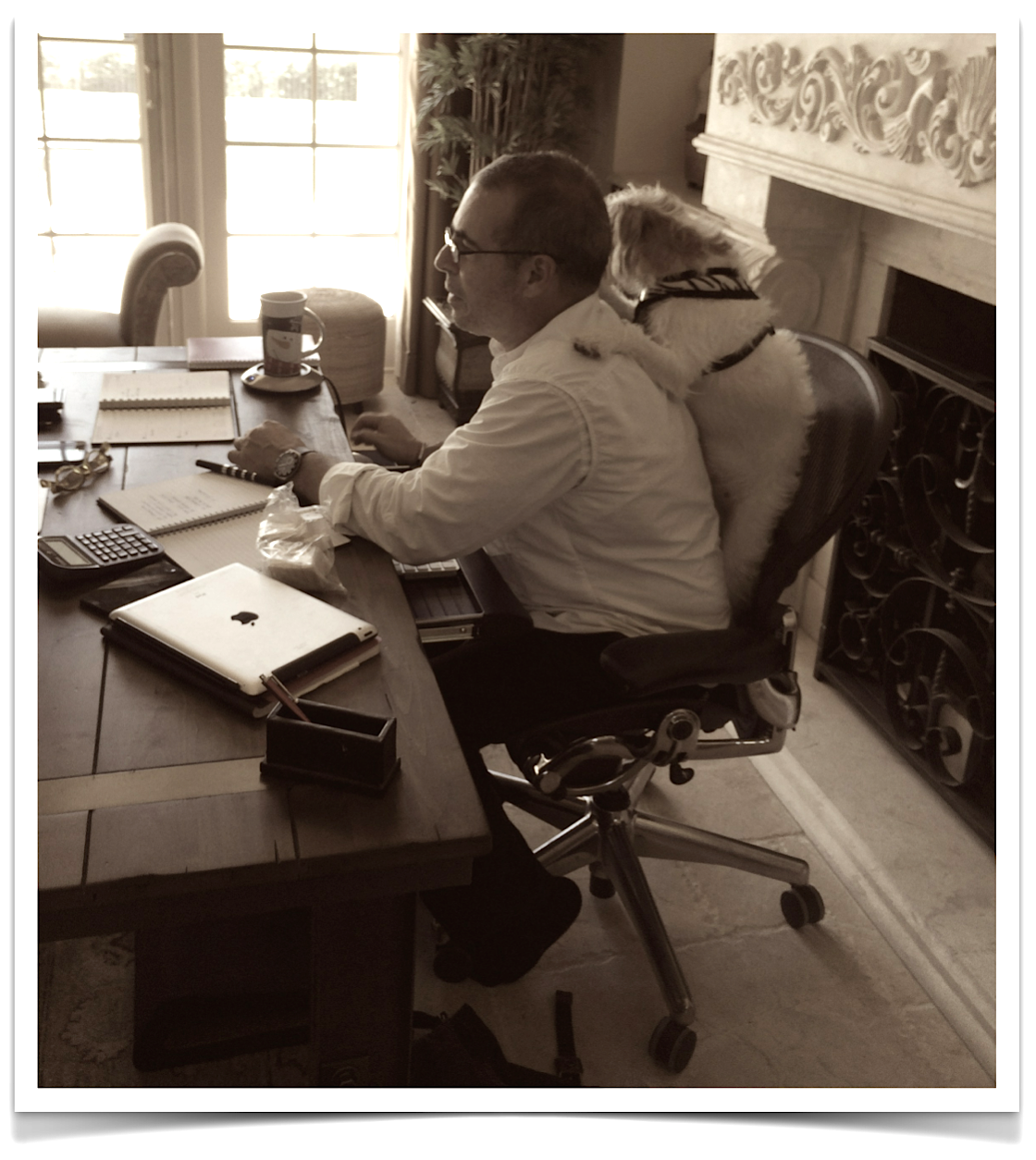
Screen Shot 2015-05-31 at 2.50.31 PMWhen you sit working and Skyping in a chair for as long as I typically do, you need a great chair, and the Herman Miller Aeron chair is simply the best chair I ever sat in.  Not only is the Aeron the right choice for my desk [and nearly every desk in the Advantage Co], it is also the choice for my kitchen tables in both Williamsville and Naples.  It certainly makes a difference in Naples, where Joe often spends 4-6 hours a day holding court at his favorite spot at the head of the table.

Screen Shot 2015-05-31 at 1.57.26 PM

If you don’t have an Aeron for your desk, you’re sitting in the wrong chair.  It’s worth the investment – and your back will thank you every night.  Try it out, and I am certain it will become one of your favorite things too.


The Aeron chair is an office chair designed in 1994 by Don Chadwick and Bill Stumpf and is featured in the Museum of Modern Art’s permanent collection.  The chair was reportedly named after the Celtic god Aeron, as well as referring to aeration and aeronautics.

Product Story
Own the problem, and define it as deeply as you can.  Bill Stumpf echoed this mantra on every project he took on for Herman Miller, but perhaps never more completely than with the groundbreaking Aeron Chair.  Working with Don Chadwick, Stumpf began thinking about what a chair ought to do for you by consulting people who spend a lot of time in chairs—older people in retirement centers.  When Stumpf and Chadwick took what they learned and applied it to work seating, they started a revolution in ergonomics.

Design Story
We wanted a totally new kind of chair.  So we turned to the two designers who had produced the groundbreaking Equa chair and asked them to start with a clean slate and no assumptions.  A bold challenge!

“It was a matter of deliberate design to create a ‘new signature shape’ for the Aeron chair,” says designer Bill Stumpf.  “Competitive ergonomic chairs became look-alikes.”  Differentiation was a huge part of the Aeron design strategy, and it remains one of, if not the most, critical aspects of Aeron’s success.

“The human form has no straight lines; it is biomorphic.  We designed the chair to be, above all, biomorphic, or curvilinear, as a metaphor of human form in the visual as well as the tactile sense.  There is not one straight line to be found on an Aeron chair.”

Screen Shot 2015-05-31 at 2.12.49 PM

My Favorite Things 001

My JournalScreen Shot 2015-05-25 at 7.47.36 PM

As I was finishing up my round of golf today with the Core Group [in the rain], I was thinking about how playing golf with the same great group of friends every Sunday over the past 15+ summers was definitely one of my favorite things to do.  On the ride home, I was thinking about what all my other favorite things were.  And then I started to divide them between my favorite things to do, my favorite places, my favorite people, and my favorite items.  It was fun every time another favorite thing popped into my head.

And since my blog is for my grandchildren, I thought I would take the time to post my favorite things.  I think your favorite things say something about you, and I’d like to give my grandchildren more than my opinions.  I doubt if my postings will be regular, but I will try to keep up a nice pace of favorite postings.

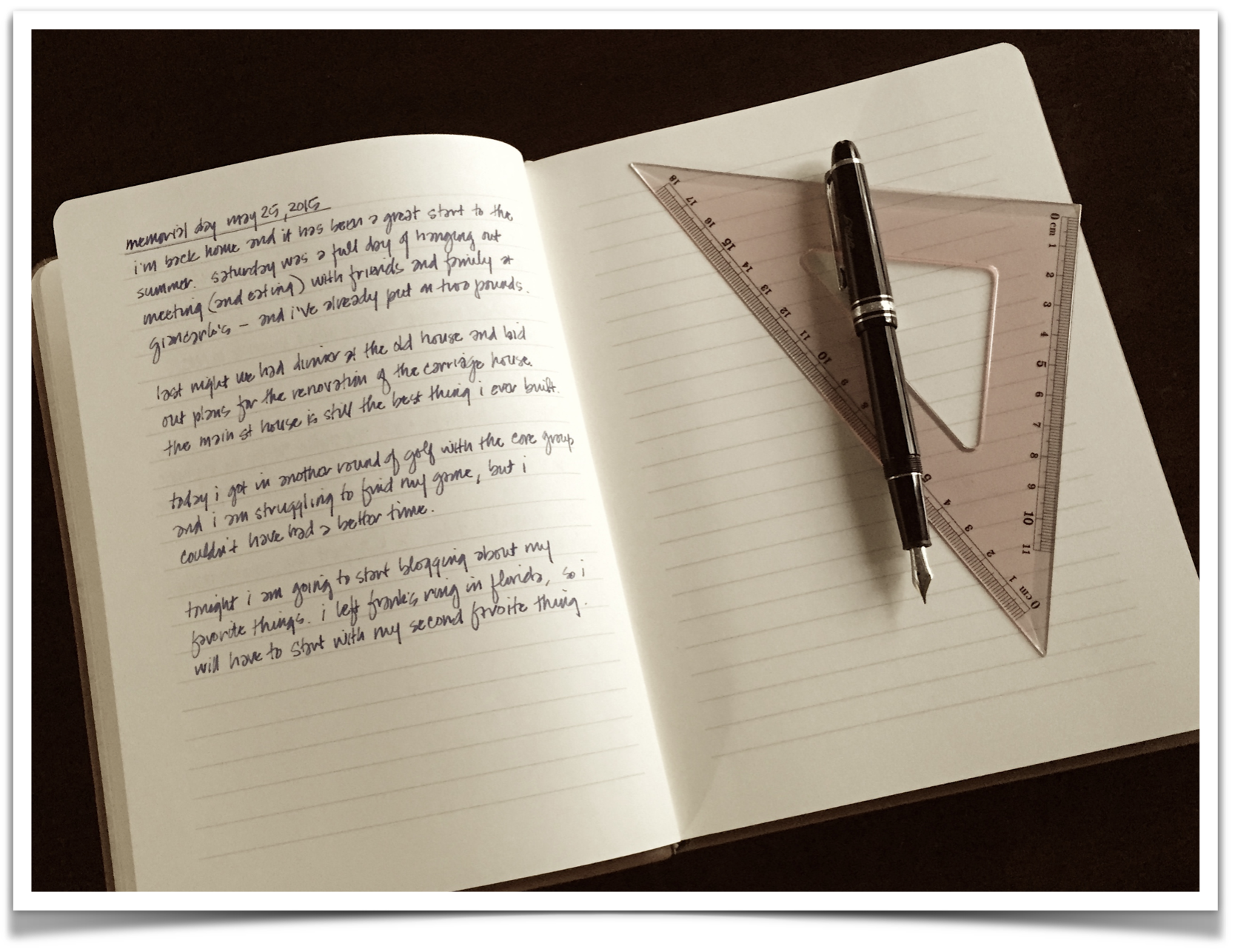
My first favorite thing is my journal.  I thought it would be a great place to start since it is not only one of my favorite items, but writing in my journal is also one of my favorite things to do.

Screen Shot 2015-05-25 at 7.48.11 PMI definitely have the Jesuits to thank for my journal writing habits.  In high school, they encouraged us to keep a journal.  They said write it all down – and then from time to time go back 6 to 8 months to see how it all looks and how it is all turning out.

Today I have a stack of journals chronicling my adult life.  If anything, I have been too frank, but my entries truly detail both the events and emotions as they were unfolding in my life.  Seldom do my recollections match my journals.  The good news. however, is that my recollections usually accentuate the positive and eliminate the negative [which makes for great memories].

I think I have recommended keeping a journal more than any other bit of advice that I have dispensed with over the years.  And for the past 15 years or so, I have used the same leather journals that I often gave to friends, business associates, and family as Christmas gifts [before technology made handwriting nearly obsolete].  I was originally given one as gift, and it was a Tiffany’s journal.  So we hunted down the manufacturer, and Pam talked them into selling us the same journal [in the same blue leather].  Eventually I switched to a calfskin leather, and it gives me great pleasure to pick it up, open it up, and write in it nearly every night.

Give it a try, it might become one of your favorite items and one of your favorite things to do.

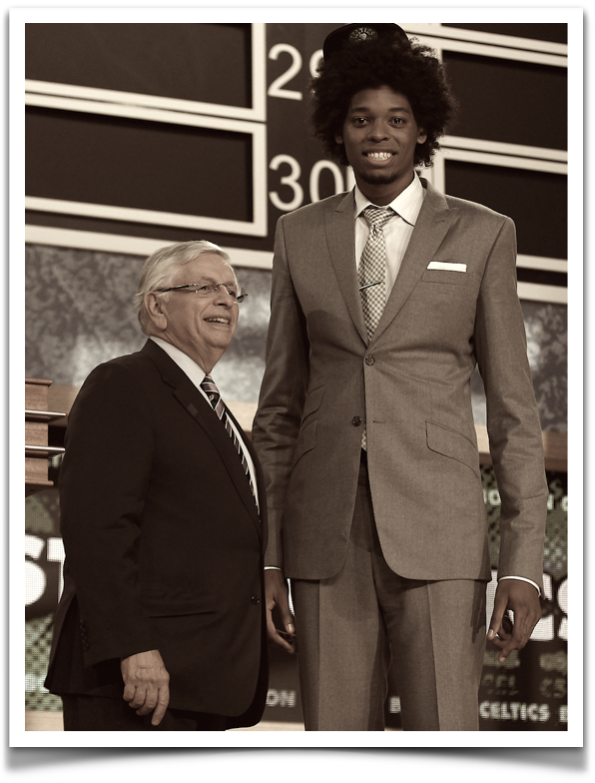
If Height Mattered …

If Height Mattered …
The World Would Be Run By NBA Players.Screen Shot 2015-05-21 at 7.50.38 AM

And If Breasts Mattered …
The World Would be Run By Kate Upton.Screen Shot 2015-05-21 at 7.50.14 AM

But What Really Matters [If You Want To Run The World] Is …
MoneyScreen Shot 2015-05-21 at 8.38.07 AM

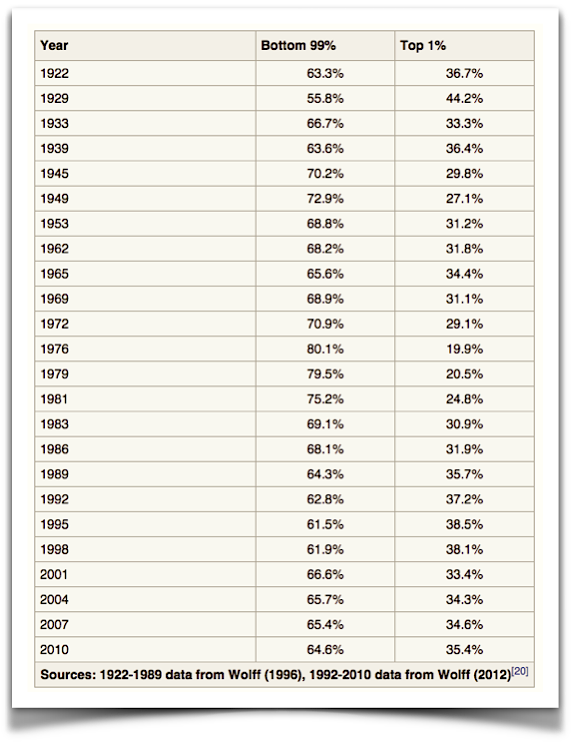
“The shaping of the will of Congress and the choosing of the American president has become a privilege reserved to the country’s equestrian classes, a.k.a. the 20% of the population that holds 93% of the wealth, the happy few who run the corporations and the banks, own and operate the news and entertainment media, compose the laws and govern the universities, control the philanthropic foundations, the policy institutes, the casinos, and the sports arenas.” – Lewis Lapham [editor of Harper’s]

According to Wikipedia, in 2007, the top 10% wealthiest possessed 80% of all financial assets.  In 2007 the richest 1% of the American population owned 35% of the country’s total wealth, and the next 19% owned 50%.  Thus, the top 20% of Americans owned 85% of the country’s wealth and the bottom 80% of the population owned 15%.  In 2011, financial inequality was greater than inequality in total wealth, with the top 1% of the population owning 43%, the next 19% of Americans owning 50%, and the bottom 80% owning 7%.  However, after the Great Recession which started in 2007, the share of total wealth owned by the top 1% of the population grew from 35% to 37%, and that owned by the top 20% of Americans grew from 85% to 88%.  The Great Recession also caused a drop of 36% in median household wealth but a drop of only 11% for the top 1%, further widening the gap between the top 1% and the bottom 99%.

According to PolitiFact and others, in 2011 the 400 wealthiest Americans “have more wealth than half of all Americans combined.”  Inherited wealth may help explain why many Americans who have become rich may have had a “substantial head start.”  In September 2012, according to the Institute for Policy Studies, “over 60 percent” of the Forbes richest 400 Americans “grew up in substantial privilege.”

In 2013 wealth inequality in the U.S. was greater than in most developed countries other than Switzerland and Denmark.  In the United States, the use of offshore holdings is exceptionally small compared to Europe, where much of the wealth of the top percentiles is kept in offshore holdings.  While the statistical problem is European wide, in Southern Europe statistics become even more unreliable. Less than a thousand people in Italy have declared incomes of more than 1 million euros. Former Prime Minister of Italy described tax evasion as a “national pastime.”  According to a 2014 Credit Suisse study, the ratio of wealth to household income is the highest it has been since the Great Depression.

Screen Shot 2015-05-21 at 8.09.14 AM

Everyone talks about the 1% — but who are they exactly?  Here is the breakdown:

It takes at least $389,000 to make the club: That was the minimum threshold of adjusted gross income in 2011, the most recent year for which the IRS has final data.

In 2001, you had to make at least $306,635 to make the cut.  But if you factor in inflation, that’s roughly the same amount as in 2011.  The minimum threshold was much higher in 2007, just ahead of the economic collapse.  That year you needed $426,439 to be in the top 1%.

The 1% as a group pay a bigger share of income taxes than their share of adjusted gross income: As a group, the top 1% earned nearly 19% of all adjusted gross income reported in 2011 and paid 35% of all federal income taxes.  Of course, adjusted gross income doesn’t measure all income, only what must be reported for taxes. So, for instance, it doesn’t include income that those in the top 1% may have made from tax-exempt investments, such as municipal bonds.  Nor do federal income taxes represent any income group’s entire tax burden.

The effective tax rate of the top 1% was 23.5%: The average tax rate paid by these high-income households was 23.5% — which represents the percent of their income they paid in federal income taxes.  That’s below the 27.6% they paid in 2001 — a high point for the decade that followed.

Some people may think those rates sound low.  But they’re still well above the average tax rate paid by others.  For instance, the top 50% of filers — who had an AGI of at least $34,823 — paid an average tax rate of just under 14%.

Who’s in the top 1%: There’s been remarkable consistency over the years in terms of which professions typically occupy the top 1%.  Analyzing IRS data from 1979 through 2005, tax researchers at Williams College and at the Treasury Department found that five occupations accounted for the lion’s share of the top 1% again and again.  They were executives at non-financial companies, financial professionals, doctors, lawyers and an occupational category that lumps together computer, math, engineering and technical jobs in non-financial firms.


International Corp Tax Rates Japan1http://www.kpmg.com/global/en/services/tax/tax-tools-and-resources/pages/corporate-tax-rates-table.aspx

Right now our corporate income tax is amongst the highest in the world.  This does two things to undermine our future: First, it puts American companies at a distinct disadvantage economically.  If an American company earns a billion dollars and is taxed at 40%, that leaves $600M to invest, while if company in the United Kingdom makes a billion dollars and is taxed at only 23%, they have $770M left to invest.  That is almost 30% more capital to invest.  Over time that kind of competitive financial edge will have a dramatic impact on our international and domestic competitiveness.

And, second, our egregious corporate tax rate encourages American companies to transmigrate to more tax friendly countries, and then, accordingly, it discourages them from ever repatriating their capital.  This leads to an enormous cash drain from America that dramatically reduces our collected taxes and domestic corporate investments.

At the last count, at the end of June, Apple had $165B of cash, cash equivalents and marketable securities on its balance sheet – up a heady $18B on just nine months earlier.  The vast majority of that money – $138B – is held by Apple’s foreign subsidiaries. From September 2013, its overseas cash mountain increased by $26B.

In April, US Trust, a private bank, calculated that Apple’s hoard, then $160B, was more than twice the UK’s cash reserves, which stand at $70B, or roughly equivalent to Britain’s annual spending on education and housing combined.


What this all means is that there will be an inevitable change to our current inequitable tax structure.  I am convinced that our maximum personal income tax will be raised to at least 60% and the corporate income tax will be reduced to 30% [including capital gains tax].

Screen Shot 2015-05-21 at 10.02.17 AM

This will have a dramatic impact on the spending of the wealthiest of Americans.  With a top rate of 39.6% on personal income tax [which is essentially our corporate tax rate], the wealthiest of Americans are now encouraged by the high corporate tax rate to simply take their enormous income [rather than leaving it in their companies for reinvestment], pay their personal income taxes, and still have enough left over for their conspicuous consumption [which only serves to dramatize the gap in wealth distribution].  This annoyance will assuredly be reduced by a higher personal income tax.  If the personal income tax rate climbs to 60% [as I am certain it will], the uber-rich will now have to earn 50% more to have the same spending power.

For example: if someone wants to buy a yacht for $12M, they currently need to earn $20M to net $12M after they pay their 40% [$8M] in taxes.  But, with a new tax rate of 60%, the same $12M will call for $30M in pre-tax income.  The $30M in income would incur an $18M tax bill, and that would leave the same $12M that it currently takes only $20M to end up with [after taxes].

This will inexorably slow down conspicuous consumption, while a lower corporate tax rate will encourage the wealthiest to leave their income in their corporate environment, making reinvestment decidedly more advantageous.

And that is why I am making the change to C corps for most of my investments.  Eventually, I want to be paying a 30% corporate income tax instead of a 60% personal income tax.  And I will be more than happy to continue to reinvest with my after-tax earnings.

That’s how I see it.  What do you see?

I’m coming home to pick up a few bucks.

Screen Shot 2015-05-01 at 10.20.45 PM

From Labor Day to Memorial Day I reside in Naples, Florida.  Over the past ten years it has steadily become my home and sanctuary.  And while Wil Durant warned me of my coming ossification, I can’t help but appreciate the salubrious effect Naples has on me.  The past few years certainly rank as one of the most productive [and most enjoyable] periods of my life, and I am convinced it would not have been possible without the redoubt that Naples provides.

In a few weeks we’ll be heading back to WNY for the summer.  It is a time to reconnect with some great friends, engage in some new opportunities, and, most importantly, spend irreplaceable time with my kids and grandkids.  But the downside of heading back ‘home’ is the inevitable disruption of the curative equilibrium that Naples provides me.

Screen Shot 2015-05-01 at 10.26.33 PMI have a felicitous list of friends that I am really looking forward to seeing again, but I have an almost inexhaustible list of people I have no desire to chance upon.  Old animosities in WNY have a way of metastasizing in what is otherwise a great place to raise a family [and spend the summer].

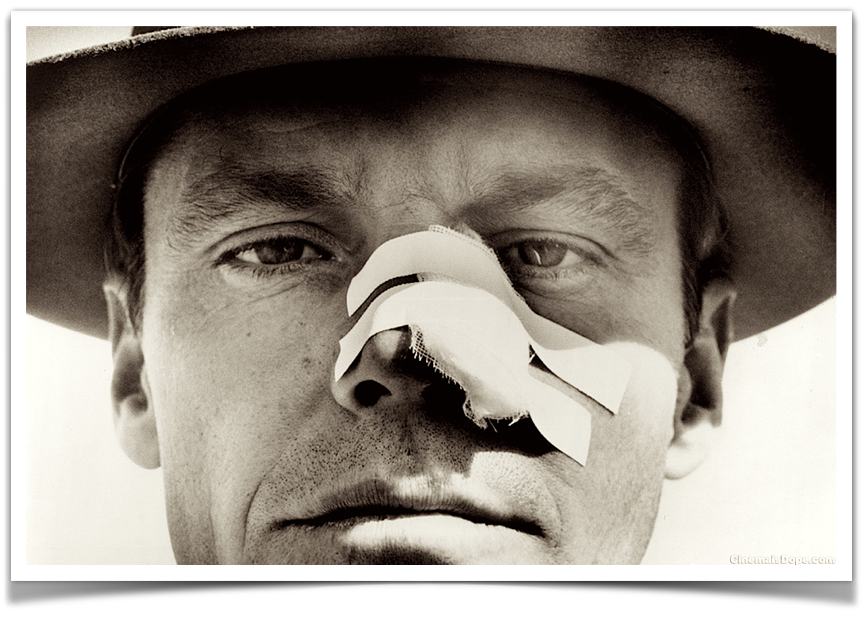
The best and worst characteristic about WNY is that everyone is from here.  At its best, it is like a rock.  You get to raise a family surrounded by childhood friends and a gaggle of relatives and extended family that you can trace back generations.  At its worst, it’s an accumulation of petty deviseness that comes from a lifetime of living.  Sometimes its hard to keep track of who wronged who.  My advice – “Forget it Jake, it’s Chinatown.”

Screen Shot 2015-05-01 at 9.48.31 PMhttps://www.youtube.com/watch?v=1v_BVNGAfYM

I was thinking of putting together a list of people that I really don’t want to run into while I’m home, but they already know who they are [and the feeling, I’m certain, is mutual].  So, if I do chance upon you over the next few months, just give me the finger to remind me I’m your number one fan.  And you can, like me, take comfort in the fact that I’ll soon be returning to my presidio.

And for those of you that are looking forward to another great Buffalo summer, I can’t wait to share it with you.  The summers seem to be getting better every year, and I value the time I spend with you more than ever.  See you soon.

Congratulations, Larry!

Screen Shot 2015-04-01 at 8.13.52 AM

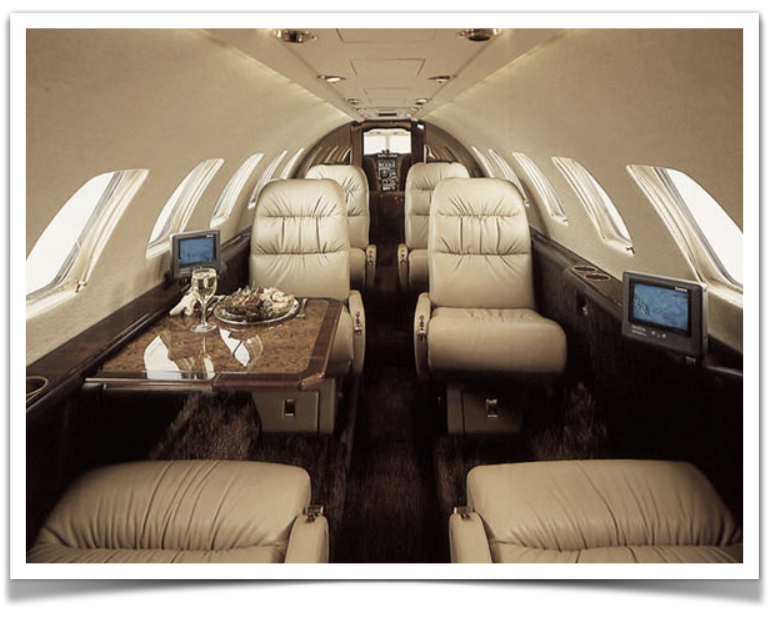
I got my first ride very early this morning at 5AM in Larry Schreiber’s new jet, and we have just touched down in Florida.  Larry bought his 1997 Cessna Citation V/Ultra last week, and it was already flight ready this morning.  Very few of Larry’s friends knew that he was taking pilot classes, and only two of us were brave enough to fly with him on his maiden voyage to Florida [with Larry in the co-pilot seat].

In 1994, the Ultra was named Flying magazine’s “Best Business Jet.”  The Ultra was produced from 1994-1999.  The Cessna Citation V/Ultra was developed in light of the growing demand for increased cabin space in light jets.  The Citation V is a stretched version of the Citation II, with 406 cubic feet of cabin space with an additional 76 cubic feet for storage.  The jet also features an enclosed cabin and boasts a range of 1,960 nautical miles.  The Citation V has upgraded engines for improved all around performance.  Typically, the Citation V/Ultra has seating for up to eight passengers and has the ability to easily fly non-stop from Buffalo to Ft. Lauderdale.

For those of you curious about price, Larry only paid $1.5M for the jet.  Of course, the upkeep and fuel are the real costs, but Larry said that it was worth it.

Screen Shot 2015-04-01 at 8.13.27 AM

Now that was a ride.

Screen Shot 2015-02-21 at 10.05.39 AMFor the first three years, I was little more than an idle observer of our FedCloud initiative; but, for the past 16 months, I have been working directly with Tom and John to bring our FedCloud adventure to fruition.  It was a high risk venture [certainly higher than we ever anticipated], and it was wrought with tension throughout the journey [somewhere between white water rafting and waterboarding].  Fortunately, this past Thursday, we were able to complete the sale of Autonomic Resources [after nearly three months of a roller coaster ride of negotiations and due diligence].

Although the sale of Autonomic Resources’ remarkable FedRAMP ATO’s might put our FedDROP start-up in limbo, I couldn’t be happier for the entire Autonomic Resources family, especially the crew at our headquarters in North Carolina.  And I am particularly proud to have been in the trenches with Tom and John seeing this thing through to such a successful conclusion.

A special round of thanks needs to go out to Butch, Kerry, Mike, Lynn, Geno, and the Pfalzgraf team for bringing this one home.  And an ever bigger thanks to Joe Kreuz, who got all these partnerships started over 20 years ago.

When I look at our lineup of IT partnerships today, especially Capax Global, Sceven, ABX, and AP Phoenix [which just had it biggest month ever in January], I can’t help but be excited about what the future has in store.

My family is healthy and happy, I have the best partners in the world, the sun is shining, and the sale of Autonomic Resources has provided us with the resources to expand exponentially.  If I could drop a dozen pounds, I’d have it made.

PS  Tom and Anthony are both in Naples today, and we will be over at the Shoppes at Vanderbilt checking out a potential location for our warm weather ABX [along with a new TW&Co].  I’ll keep you posted.

The Stories I Remember …

Screen Shot 2014-12-28 at 9.17.25 PM

Before I go any further with my blog postings, I need to offer up fair warning that the stories I tell are simply the stories I remember.  That caveat should protect me from the need to redress my many omissions and errors.  The people, places, moments, circumstances, outcomes, and just about all of the recollections of my past have a way of fitting the narrative – if not always fitting the facts.  So it goes.


Another year has rushed to conclusion, and although they get shorter as I grow older, I haven’t had a year with so much going on since 1997.  The big difference between 1997 and 2014, however, is that 2014 was all good.  But I won’t bother kicking 1997 around [because without it and all the chaos it caused, I definitely wouldn’t have the friends, businesses, or opportunities that I enjoy today].

But I don’t want to dwell on all the good fortune that 2014 brought us, I just want to take this opportunity to aggravate all the people that have given me a hard time over the years.  Let’s start with the biggest jerk I’ve ever had to deal with …

Aw, come on, you didn’t really think I would go there, did you?  We all have our list of betes noires [and I know I’m on my fair share of them], but they’re best forgotten – because nothing annoys them more than being irrelevant.  Maybe when I’m 100, we’ll see what I remember.  Until then, I’ll just let an incredible 2014 bother them [on the outside chance that they even notice or care].

Enjoying your life is the only revenge that actually feels good [so I don’t bother serving up anything else].

I was always looking forward to Fr. Sturm’s 100th birthday because he promised to ‘tell all’ [or at least all I wanted to know about his women over the years and Jesuit mysticism].  Right now, he’s probably shaking his head, troubled by how he is ever going to get me into heaven.  I wonder if getting me in is going to be as hard as it was for Fr. Nagle to get me into BC?  But never sell the Jesuits short.  I’m still counting on John, just in case there really is a heaven.

While I was up north for Christmas, I ran into a few people that I told the most well-intentioned but absurd stories to.  Realizing that I jumbled the names and events of most of my tales, I feel the need to tell everyone I talked to while I was home to forget everything I told them.  I’d be better off telling stories like my brother-in-law Bob.  He’d just make up the most ridiculous shit and then sell it with a straight face.  When he was building his REIT and getting ready to take it public, he’d tell people he was retiring to a pig farm he bought in Alden.  And then there were his Hollywood starlet stories … I miss Bob.  I miss the people that made me laugh the most – and Bob definitely made me laugh.

I had a chance to go down memory lane at Giancarlo’s with a couple of alumnae of Nottingham High School.  Nottingham was an all-girls high school, and it was in a class by itself.  My date for both my junior and senior year proms was the lovely ballerina, Nancy Galeota, but I don’t think I’ve talked to her since her senior prom.  I was a freshman in college, and although I came home for her big night [she was class president], I wouldn’t go to the after-prom party.  I’m pretty sure she did ok at the party without me but then again, my recollections betray me.  Anyway, I got to telling stories about hanging out at Cole’s back in the day, and I’m certain that it was a mangled remembrance at best.  Forgive me.  But it did jog my memory enough to recall that I was briefly and hopelessly in love with Molly O’Connell, the most beautiful girl that ever walked the halls of Nottingham, maybe.

For the past few days, Amanda and I have been spending time with some new friends from Buffalo.  Once again, I am sitting here thinking of the narrative I offered up over a couple of really enjoyable dinners, and I am hoping I was both accurate and kind.  At least when I write something, I have the opportunity to look it over [several times], but when I’m rolling along about the past, it’s just a stream of consciousness that Wittgenstein might be proud of, but with little merit beyond its possible thought-provoking value.  And while I can live with my inaccuracies, my real disappointment comes with being inadvertently spiteful or bitter in any of my remembrances.  I just don’t see the past that way [but there is this one asshole who wrote a book …].

As for 2014, what I remember most is that I worked really hard, Skyped for hours a day, got really fat, and was of value to my partners in a variety of endeavors [especially the FedCloud Ecosystem].  So, accordingly, my next post about 2015 will include not working as much, getting fit, and building on the value and opportunities we created in 2014.

…  and if you really want to see my list, you’ll need the password.